Schulzke S, Fahnenstich H, Büchner S, Department of Neonatology (SS, FH), University Children’s Hospital Hospital, Department of Dermatology (BS), University of Basel, Basel, Switzerland
Published: February 1, 2003
Subcutaneous fat necrosis of the newborn (SCFN) is a rare disorder with different etiologies. There are no epidemiologic data available for SCFN. In spite of its low incidence, this entity should not only be known by neonatologists, but also by general pediatricians because of complications which occur during the first or second trimenon.
Case presentation
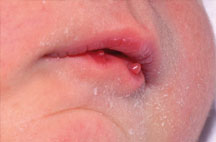
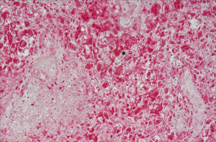
We report on a term girl born by emergency cesarian section because of variable fetal decelerations during labor. She weighed 3830g, her Apgar scores were 4/6/8 (1'/5'/10') and the arterial umbilical cord pH was 6.89. She was transferred to the neonatal intensive care unit for mild RDS (maximum FiO2 of 0.3). Transient arterial hypotension was rapidly corrected by two intravenous bolus administrations of 0.9% saline solution. Initially her blood gases showed a metabolic acidosis (pH 7.14, BE -18 mmol/l) which resolved after 12 hours of live. She did not receive any body surface cooling. The neurological exam after 24 hours of life was normal and breastfeeding was started on day 2 without problems. Cranial ultrasound exams including doppler studies on day 2 revealed no signs of increased echodensities or bleeding. The girl was discharged to the maternity ward in good health on day 5, but was readmitted on day 6 because of obviously painful, firm, large erythematous nodules and plaques on her back, dorsal neck and upper arms (Fig 1, 2). She was placed in prone position and received paracetamol. Histologic examination of a biopsy specimen of a nodule on her back demonstrated patchy fat necrosis with cristallisation of fat. In addition macrophages and foreign-body giant cells, neutrophils, lymphocytes and eosinophils were present in the inflammatory infiltrate (Fig 3).
 |
 |
 |
|
Fig. 1. Clinical appearance of SCFN |
Fig. 2. Clinical appearance of SCFN |
Fig. 3. Histology of SCFN |
These findings were consistent with a diagnosis of SCFN. Additional diagnostic workup showed normal serum calcium levels between 2.2-2.6 mmol/l (1.3-1.6 mmol/l ionized calcium), no hyperlipidemia and an unremarkable renal ultrasound scan. Starting on day 16, skin lesions gradually decreased in size and intensity and were less erythematous and not painful anymore. The newborn was at least discharged home. At 12 weeks of age, there were no signs of hypercalcemia and the skin symptoms have almost completely resolved.
Discussion
Subcutaneous fat necrosis of the newborn (SCFN) is characterized by painful, firm, erythematous nodules and plaques over the trunk, arms, buttocks, thighs, and cheeks of full-term newborns. Lesions appear in the first or second month of life, resolving within several weeks to months. A granulomatous infiltrate is formed subsequently. Lesions may calcify and nonrenal absorption of calcium increases. The exact pathophysiology of SCFN is unknown. Perinatal stress like in aspyhxia, meconium aspiration or hypothermia, followed by skin hypoperfusion may lead to subcutaneous fat necrosis (1). In the context of localized inflammation, calcium mobilization from the necrosis and elevated vitamin D levels hypercalcemia may occur (2). The direct application of ice packs on the skin to treat supraventricular tachycardia and induced hypothermia in cardiac surgery can also trigger this condition (3,4). SCFN is a self-limiting disease, but may be complicated by hyperlipidemia and severe hypercalcemia; the latter can occur after several weeks and result in seizures, blindness and even death due to infections or cardiac arrest (5,6). The mean differential diagnoses are sclerema neonatorum, histiocytosis and cellulitis; conditions like erythema nodosum, lipogranulomatosis (Farber disease), neurofibromas or sarcomas should be excluded. Diagnosis of SCFN usually requires a deep skin biopsy which shows patchy areas of fat necrosis, surrounded by a granulomatous infiltrate of lymphocytes, macrophages, and giant cells. Many of the fat and multi-nucleated giant cells contain needle-shaped clefts that often lie in a radial arrangement (7).
Treatment of SCFN consists of analgesia. If hypercalcemia occurs, it may need aggressive treatment. Baseline treatment is fluid loading, termination of vitamin D substitution and a low calcium diet together with diuretics like furosemide to decrease calcium intake and increase renal calcium output. If these measures do not maintain a normal calcium level prednisone 1-2 mg/kg/d is used to reduce the granulomatous inflammatory process and to lower vitamin D production. Since hypercalcemia may occur after several weeks and last for months, periodical checks of serum calcium are necessary in the first 3-6 months of life. Parents should be informed of the signs of hypercalcemia like failure to thrive, hypotonia and vomiting. They should be urged to contact their pediatrician, if any should appear.
Neonatologists should be aware of the existance of SCFN after perinatal distress and as a possible adverse effect of hypothermia. One could speculate, that new treatment strategies like body surface-cooling for perinatal asphyxia may lead to an increased incidence of SCFN, because of the simultaneous occurence of two known risk factors for this disease.
References
1. Wiadrowski TP, Marshman G. Subcutaneous fat necrosis of the newborn following hypothermia and complicated by pain and hypercalcaemia. Australas J Dermatol 2001;42:207-210 (Abstract)
2. Hansen KN, Balslev T, Lyngbye TJ, Olesen B, Ebbesen F. Subcutaneous fat necrosis with hypercalcemia. Ugeskr Laeger 1995;157:5398-5399 (Abstract)
3. Craig JE, Scholz TA, Vanderhooft SL, Etheridge SP. Fat necrosis after ice application for supraventricular tachycardia termination. J Pediatr 1998;133:727 (Abstract)
4. Chuang SD, Chiu HC, Chang CC. Subcutaneous fat necrosis of the newborn complicating hypothermic cardiac surgery. Br J Dermatol 1995;132:805-810 (Abstract)
5. Fernandez-Lopez E, Garcia-Dorado J, de UP, Heras I, Santos-Borbujo J, Armijo M. Subcutaneous fat necrosis of the newborn and idiopathic hypercalcemia. Dermatologica 1990;180:250-254 (Abstract)
6. Hicks MJ, Levy ML, Alexander J, Flaitz CM. Subcutaneous fat necrosis of the newborn and hypercalcemia: case report and review of the literature. Pediatr Dermatol 1993;10:271-276 (Abstract)
7. Sharata H, Postellon DC, Hashimoto K. Subcutaneous fat necrosis, hypercalcemia, and prostaglandin E. Pediatr Dermatol 1995;12:43-47 (Abstract)